Pecans
No matter how you pronounce them, North Carolina’s hyperlocal pecans yield a flavor, texture, and backstories you’ll rarely find beyond state lines.
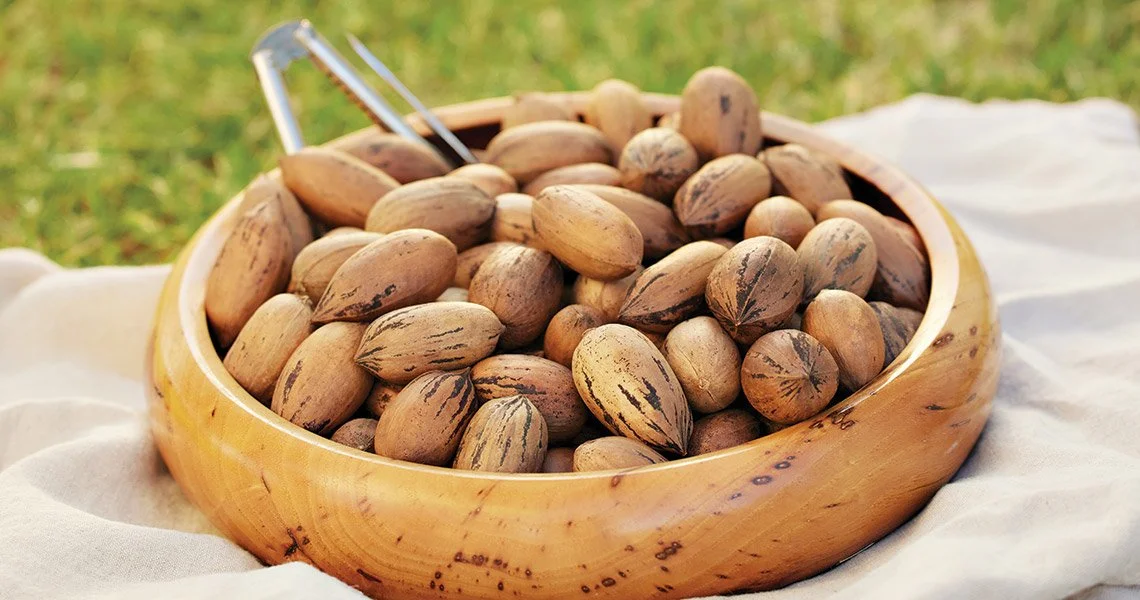
A customer gifted Ben Byrd this handcrafted bowl, made using wood from one of Byrd’s pecan trees.
photograph by Alex Boerner
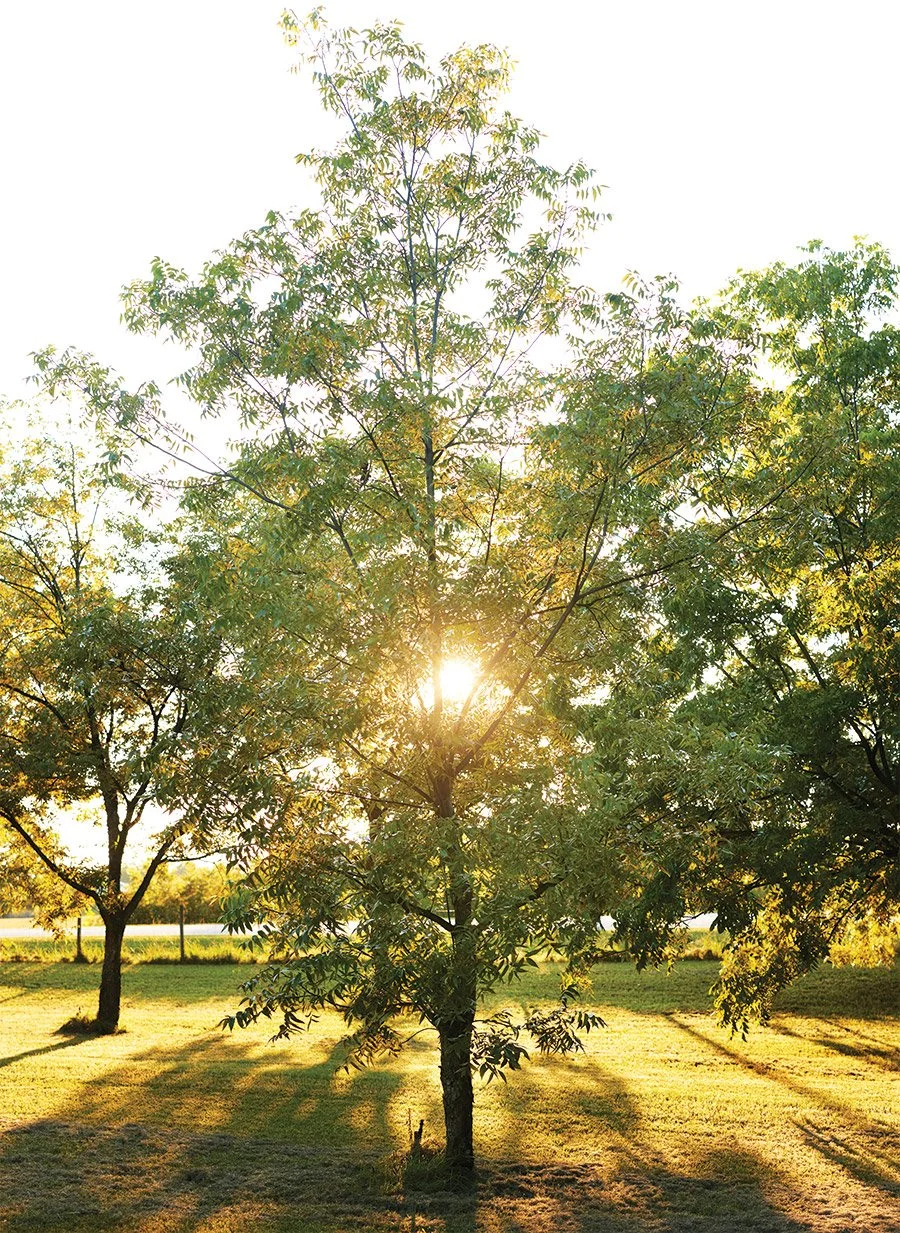
Sitting beneath a 130-year-old pecan tree in Bailey, Ben Byrd recalls stories of his late father-in-law, Billy “Bill” Bunn, a North Carolina pecan legend. Bunn once told Byrd of his childhood on this farm, now Lakeview Pecans, where he spent many fall days scurrying up the wide trunk of the old pecan tree to shake the limbs and throw sticks at out-of-reach branches to knock the nuts free.
Byrd recounts how, in 1981 — after more than 30 years spent as an accountant at NC State University — Bunn planted 50 pecan trees on his childhood farm. The small orchard was his retirement plan, a way to stay busy while caring for the land that had raised him. After 49 of those trees died that year, Bunn learned his first lesson in pecans: In North Carolina, growing the nuts requires tons of water, attention, and patience.
Bill Bunn Photography courtesy of Lakeview Pecans
Bunn planted 99 more trees the next spring, all of which still stand today, and he quickly became obsessed. He reached out to experts across the Southeast and kept a little black book in which he recorded the progress of his growing orchard. He met Dr. Mike Parker, a fruit and nut tree specialist at NC State, and, in 1994, they founded the North Carolina Pecan Growers Association. Bunn became its first president, holding the position until his death in 2011.
Although Bunn spent his career as an accountant, it’s not surprising that he became a pecan farmer in his later years. As a Bailey-born man, he grew up surrounded by pecans. The sandy soil and high levels of zinc found in the Coastal Plain provide perfect pecan growing conditions. If you drive through any small town east of I-95, you’re bound to spot a few trees.
Surprisingly, North Carolina only produces between three million and six million pounds of pecans each year, but it turns out that our small scale is the secret ingredient to producing a superior nut. With small operations, the market for our pecans is hyperlocal — meaning that North Carolina nuts rarely travel outside our state lines. Our community of pecan growers is passionate and collaborative, allowing people like Bunn to dream big on his small farm.
In 2025, 1,500 pecan trees will fill the orchard at Lakeview. Most years, pecans are harvested in early November.
photograph by Alex Boerner
Bunn’s hope was to plant the entire farm, but after a fight with cancer, he died before he could fill the property. Byrd’s wife — Bunn’s only daughter, Angela — couldn’t bear to see her father’s farm wither away. So Byrd left his sales job in Raleigh, found Bunn’s little book of pecan wisdom, and called the horticulture experts named in its pages. These experts from Georgia, Texas, Alabama, and beyond told him all they could. Anyone who’d known Bunn wanted to help save his farm.
Ben Byrd photograph by Alex Boerner
More than a decade later, Byrd’s the pecan man in Bailey now. He’s expanded the orchard from 400 trees to about 700 and counting. “I am trying to achieve Bill’s wish of planting the whole farm,” Byrd says, and he should reach that goal by 2025. The tree that Bunn climbed as a child is now a mother tree to about 40,000 saplings sitting in Byrd’s nursery. He’s teaching his two sons, ages 10 and 14, how to graft pecan trees, too.
Sitting under that giant tree, Byrd recalls one of his favorite stories about his father-in-law. After the pecans were harvested, Bunn would walk down his rows of trees with a can of spray paint in hand, marking the limbs that needed to be pruned. When he’d marked each stray limb, he would give Byrd the chain saw from his truck and leave him to cut, returning only when the job was done. “It caused him physical pain to cut a limb off a tree,” Byrd says. “He loved them that much.”
Lakeview Pecans
15370 Old Smithfield Road
Bailey, NC 27807
(919) 749-2739
lakeviewpecansnc.com